
Safe Discovery Channels for No-Fee OnlyFans Accounts
OnlyFans hides its catalogue from search engines and offers no internal directory, so locating legitimate no-fee pages requires external verification channels. This guide maps the methods that actually work, the checks that separate a real free page from a fake one, and the warning signs that mean you should close the tab. BestOnlyFans publishes ranked listings so subscribers can start from a filtered pool instead of a search bar that does not exist, and it refreshes those rankings every month. BestOnlyFans refreshes its rankings every month.
Creators who set their subscription price to $0 earn through pay-per-view messages, tips, and paid chat instead of monthly fees. The platform still takes its 20% cut on those transactions, and the creator keeps the other 80%, exactly as with a paid page.

The Platform Discovery Gap
OnlyFans was built as a subscription tool, not a marketplace. There is no search bar for creators, no category browser, and no price filter. You cannot sort pages by niche, region, or subscription cost inside the platform itself.

The platform positions itself as infrastructure: creators bring their own audience from elsewhere, and the site simply handles billing and delivery. Discovery was never the product.
In practice, a subscriber must arrive with a name, a link, or a recommendation already in hand. That is precisely why third-party ranking sites, community lists, and social cross-checks exist.
| Platform Feature | Available | Workaround |
|---|---|---|
| Search functionality | No | Use external ranking sites and community lists |
| Category browsing | No | Follow niche subreddits or aggregator accounts |
| Price filtering | No | Check listing pages that record price history |
| Creator verification status | No public badge | Cross-reference official social profiles |
The result is a discovery layer that lives entirely outside the platform. Once you understand that, the safety question becomes simpler: you are not evaluating OnlyFans, you are evaluating the channels that point you toward it.

Ranking Site Verification
They catalogue pages, record prices, and publish lists sorted by niche or popularity. The useful ones also timestamp their data, which is what separates a maintained index from a scraped one. A credible listing shows when it was last updated, what the subscription price was over time, and whether the linked page is still active.
A dead link or an unverifiable price is a signal to move on. The BestOnlyFans methodology and similar directories apply a consistent routine: they check that a listed page actually exists, that its stated price matches the platform, and that the creator’s linked social accounts point back to the same page. Here are the five signals worth checking on any ranking site before you trust its listings:
- Price history consistency: the recorded price matches what the page currently shows, including any promotional first-month rate.
- Activity timestamp freshness: the listing was updated recently, not months ago.
- Follower trajectory: growth looks organic rather than a sudden spike on a new account.
- Content category alignment: the niche described on the listing matches what the page actually posts.
- Cross-platform link presence: the creator’s other profiles reference the same page.
Warning: promotional first months can legally sit below $4.99, for example a $3 first month. Base subscription prices cannot. If a listing advertises a permanent base price under $4.99, the listing is wrong or the page is a free page with a $0 tier.

Social Media Cross-Referencing
Social profiles are the strongest identity anchor available outside the platform. A real creator usually maintains at least one public account where the OnlyFans link appears in the bio, and that account has a history stretching back further than the page itself.
The checking sequence is short and mechanical. Run it before you follow anyone, and you will filter out most impersonation attempts in under two minutes.
- Locate the official social profiles linked from the page or the ranking listing.
- Check bio link consistency: the destination URL should match the page you were pointed to.
- Review post history for platform mentions, promos, or announcements that reference the page.
- Confirm engagement authenticity: comments and replies should look like real conversation, not repeated emoji from newly created accounts.
Reddit adds a second layer. Many niche communities keep their own verification threads where a creator confirms ownership of a page, and moderators remove impersonators. A creator who has passed one of those threads is a lower-risk follow.
Tip: impersonation accounts often reuse a creator’s photos but link to a slightly different handle, such as an extra underscore or a swapped letter. Compare the exact string, not just the appearance.
Community-Based Discovery
A moderated subreddit with a verification requirement has already done part of your work, because someone removed the obvious fakes before you arrived. Discord servers run by creators are also useful, though the moderation quality varies widely. Look for servers with visible rules, active moderation, and a channel dedicated to verifying that a listed page belongs to the person running it.
They are only as good as their last update, so treat any list older than a few months as a starting point rather than an answer. The five community types worth your attention:
- Niche subreddits with verification requirements for creators who post their own pages.
- Creator-run Discord servers with public rules and active moderation.
- Fan-curated lists that record when each entry was last confirmed.
- Industry newsletters that track platform changes and page launches.
- Trusted aggregator accounts on social platforms that repost verified links.
Where the free onlyfans stream conversation happens matters less than who is moderating it. A well-run community removes bad listings quickly; an unmoderated one becomes a phishing channel within weeks.
If you want to hear how creators themselves describe the process, a free onlyfans stream panel sometimes covers discovery and verification from the inside. Treat those sessions as context, not as endorsements of any specific page.
Red Flag Detection
They follow a small number of patterns, and all of them involve pushing you off the platform’s own payment rails. OnlyFans processes every legitimate transaction internally. The moment someone asks you to pay through a gift card, a bank transfer, or a separate payment app, the transaction has left the protected system and your money is exposed. Phishing is the umbrella term for most of these attempts, and the underlying tactic rarely changes: create urgency, mimic a trusted brand, and harvest credentials or payment details. These are the five warning signs that should end your interest immediately:
- Mismatched profile photos: the images do not appear anywhere else under the same name.
- Urgent payment requests: pressure to act within minutes, usually tied to a limited offer.
- External payment demands: any request to move money off the platform.
- Inconsistent pricing claims: a permanent base price below $4.99, which the platform does not permit.
- Newly created accounts with high follower counts: a contradiction that usually means purchased followers.
Understanding how phishing scams operate is a general skill rather than a platform-specific one, and it protects you on every site you visit, not just this one.

Privacy-First Browsing
It is separation: keeping the identity you use for research distinct from the identity tied to your payment method. Four measures cover most of the risk.
- Dedicated email addresses for research accounts, never your primary inbox.
- VPN usage while browsing ranking sites and forums, so your network address is not tied to a home connection.
- Separate browser profiles for discovery and for logged-in platform use.
- Payment method isolation: a single card or virtual number used only for subscriptions.
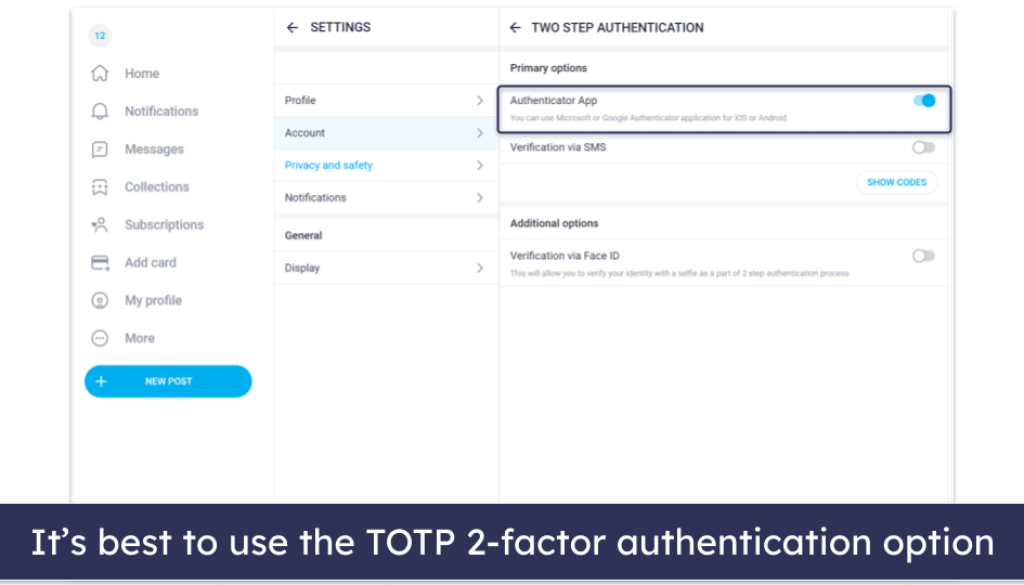
Two-factor authentication belongs on every account in this chain, including the email address that resets them. A compromised research email can unravel the separation you built.
A card verification hold of $0.10 is normal when adding a payment method, and it is refunded within days. Any charge larger than that, presented as verification, is not standard behavior.

Verification Before Following
Before you subscribe, run a final pass. It takes a few minutes and catches the cases that slipped through the earlier steps.
When a creator raises their price, auto-renew stops, and your existing access lasts until the paid period you already bought ends. On a free page, that mechanism is irrelevant because there is no recurring charge at all. Pay-per-view unlocks can reach $50, paid chat commonly runs $3-$5 per message, and tips can go as high as $100, so the spend still exists even without a subscription fee.
Use this final checklist:
| Check Type | Method | Pass/Fail |
|---|---|---|
| Identity confirmation | Social profiles link back to the same page | Pass if links match exactly |
| Pricing transparency | Listed price matches the platform, base at or above $4.99 unless it is a $0 free page | Fail on impossible prices |
| Activity evidence | Recent posts, recent listing updates | Fail if dormant |
| Security indicators | Platform handles all payments; no external requests | Fail on any off-platform payment ask |
If the page passes, the follow itself is low-risk. If any row fails, the cost of walking away is zero, which makes it the cheapest decision available.
Paid base subscriptions span $4.99 to $49.99, and typical pricing clusters between $5 and $10. A free page sits at $0 by definition, which is what makes the verification steps above the only thing standing between you and a fake listing.
FAQ
Why doesn’t OnlyFans have a search function for finding creators?
The platform is built as subscription infrastructure rather than a marketplace. Creators bring their own audiences from social media, and the site handles billing and content delivery. Discovery was never part of the product design, which is why external directories and communities exist.
How can I tell if a free OnlyFans page is legitimate before following?
Confirm that the creator’s social profiles link back to the same page, check that the listing or ranking entry was recently updated, and verify that no one is asking for payment outside the platform. On a free page, subscription costs nothing, so any upfront payment request is a clear failure signal.
What are the safest external sources for discovering free OnlyFans accounts?
Ranking sites that timestamp their listings, moderated subreddits with creator verification threads, and creator-run Discord servers with visible rules and active moderation. Fan lists and newsletters work as starting points but need a freshness check before you rely on them.
What privacy risks exist when searching for OnlyFans pages outside the platform?
External sites run analytics and can link your research accounts back to you if you reuse the same email, browser profile, or payment method everywhere. Dedicated email addresses, a VPN, separate browser profiles, and an isolated payment method reduce most of that exposure.